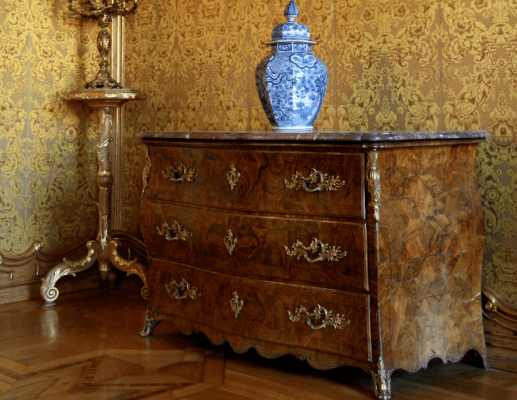
Every single week, a multi-thousand-euro piece narrowly escapes the Recypark. Here are the 10 clues we systematically examine during appraisals in Brussels.
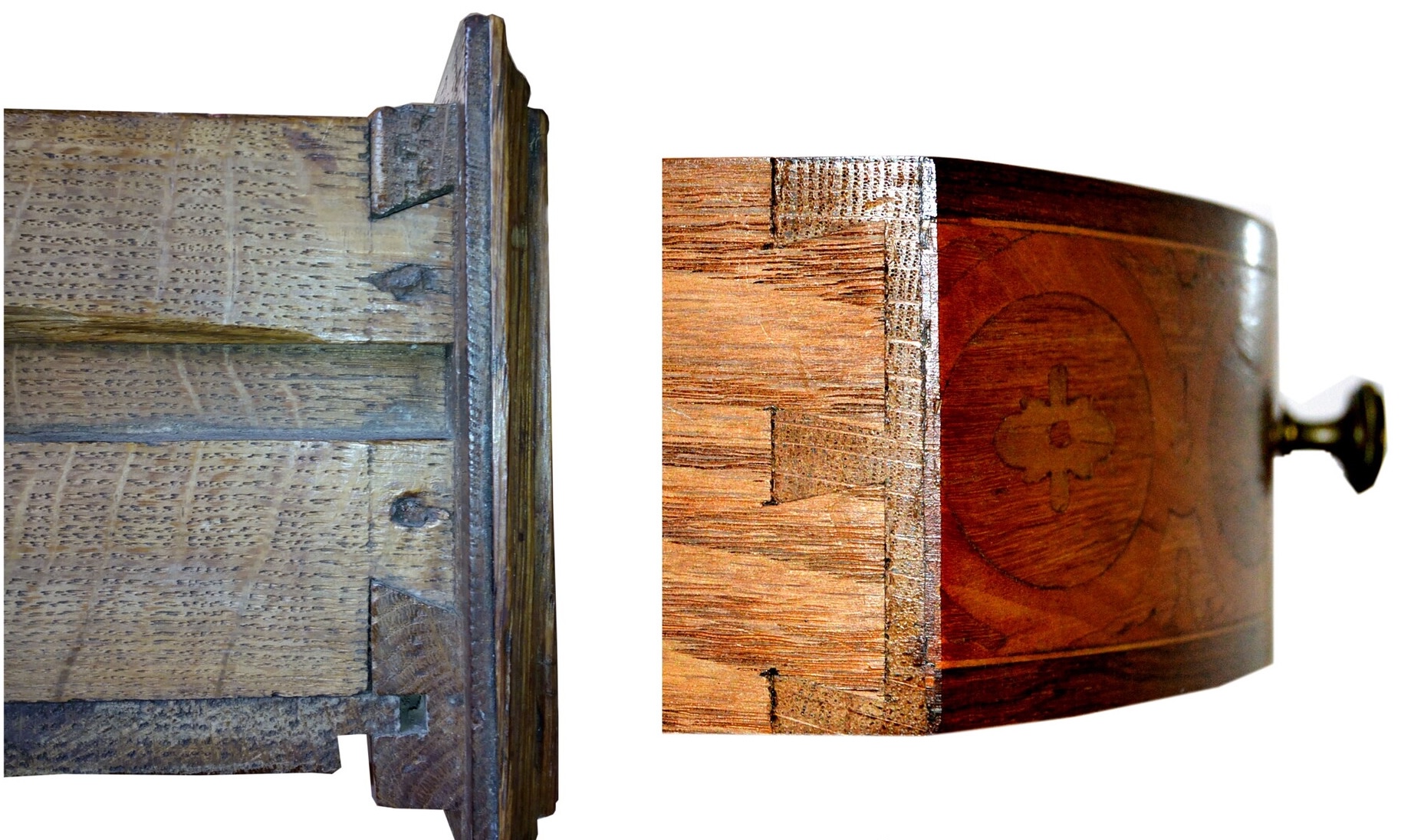
1. Joinery: hand-cut dovetails
Pull out the drawer and turn it upside down. Irregular, chisel-cut dovetails indicate a piece built prior to 1860. Perfectly uniform dovetails point to post-1880 industrial manufacturing.
2. Screws: three major historical eras
- No screws → pegged mortise and tenon joints → pre-1800
- Hand-forged screws, irregular slot, rounded head → 1800-1870
- Machine-cut, perfectly cylindrical screws → post-1870
3. Wood species
Cuban mahogany, Brazilian rosewood, tulipwood, burr elm, walnut burr, and bird's-eye maple: these are the woods that fetch high bids at auctions. Waxed 'black' oak is common and holds limited commercial value.
4. Veneers
Thin (< 1 mm), uneven veneer applied with a veneer hammer over a softwood core is typical of the 18th and 19th centuries. Thick, regular veneers (1.5 to 2 mm) are modern.
5. Patina
A deep, lustrous patina with genuine wear marks (legs, edges, pull handles) is nearly impossible to counterfeit. Be cautious of pieces with abrupt, artificial wear patterns.
ℹ️ The rule of consistent wear
On a genuine antique, wear marks always align with natural usage: table rims, feet, drawer pulls. On artificially aged replicas, wear is frequently random or unnaturally symmetrical.
6. Signatures, stamps, and labels
Search for maker marks inside drawers, hot-branded stamps beneath seat frames, or paper cabinetmaker labels. Historic names such as Jansen, Ruhlmann, Majorelle, or Leleu can multiply a piece's value by 10 to 100.
7. Bronzes and mounts
On Louis XV or Louis XVI furniture, hand-chased gilt bronze mounts (alternating matte and polished surfaces with intricate chiseling) are a strong marker of authenticity. Coarsely cast, flat mounts usually signify late 19th-century copies.
8. Most sought-after styles in Brussels in 2026
9. What has (almost) zero market value today
Black Henri II sideboards, 1980s rustic dark oak dining suites, and 1990s lacquered bedroom sets. Conversely, even in distressed condition, an original Pierre Paulin armchair finds immediate buyers.
10. In doubt? Send us 3 photos
An overall view, a close-up of the joinery (pulled-out, inverted drawer), and any label or stamp. Within 48 to 72 hours, we will tell you if an in-person appraisal is justified.
💡 The 3-photo rule
Photo 1: wide view from 2 metres away. Photo 2: upturned drawer showing the corner joints. Photo 3: any stamp, label, or inscription. These 3 photos are enough in 80% of cases for an accurate remote appraisal.
📸 Send your photos — free response within 48 to 72 h
We appraise your furniture and heirlooms with zero obligation. If the value justifies an on-site visit, we will schedule one free of charge.